
How we test singing bowls
A quiet room, a cushion, a handful of mallets, and the same four checks on every single piece before it earns a listing. A bowl is an instrument, and the only test that counts is playing it.
Our catalog is deliberately tiny, one bowl in seven diameters, sold as a complete set every time, plus three leather mallets, because every model has to get past Mira, the sound practitioner behind the brand (her story is on our about page). Here is exactly what she listens for, in the order she tests it.
Our criteria
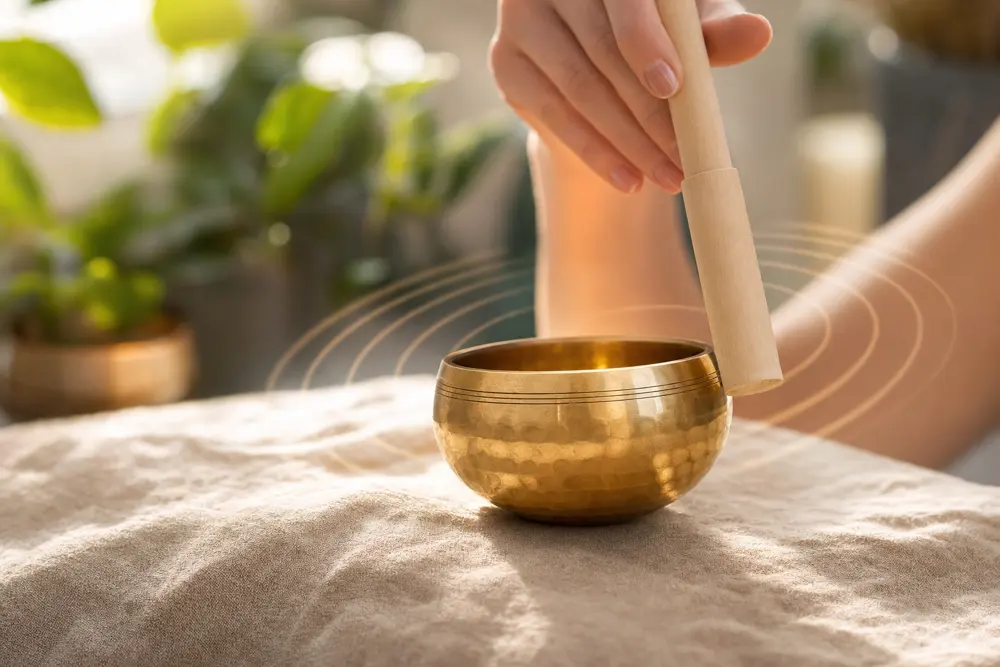
- Strike tone & sustain. One clean tap on the outer rim. A keeper answers with a clear tone that swells, then fades slowly and evenly, long enough to pace a full slow exhale. A dull clank, a wobbling pitch, or a fast dead fade is an instant reject; this check alone eliminates more bowls than the other three combined.
- Rim singing without squeal. Circling the rim at a slow, even pace should build a continuous tone within a few passes. We run it with wood and again with leather, which is more forgiving. A bowl that chatters or squeals at any pace or pressure fails, because a beginner would blame their own technique for what is really a bad instrument.
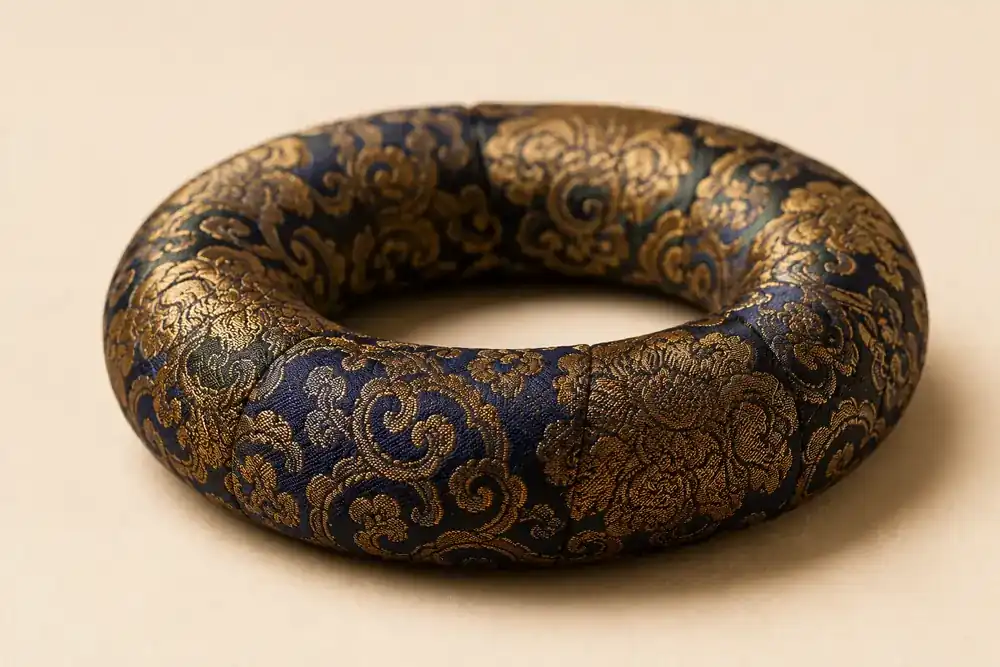
- Seat on the cushion. A bowl has to stay put while it vibrates: no creeping across its cushion, no buzzing against the fabric, no choked tone. The cushion should free the voice, not smother it. We repeat the check on an open palm, since that is how most people play the 10-minute meditation routine our guides are built around.
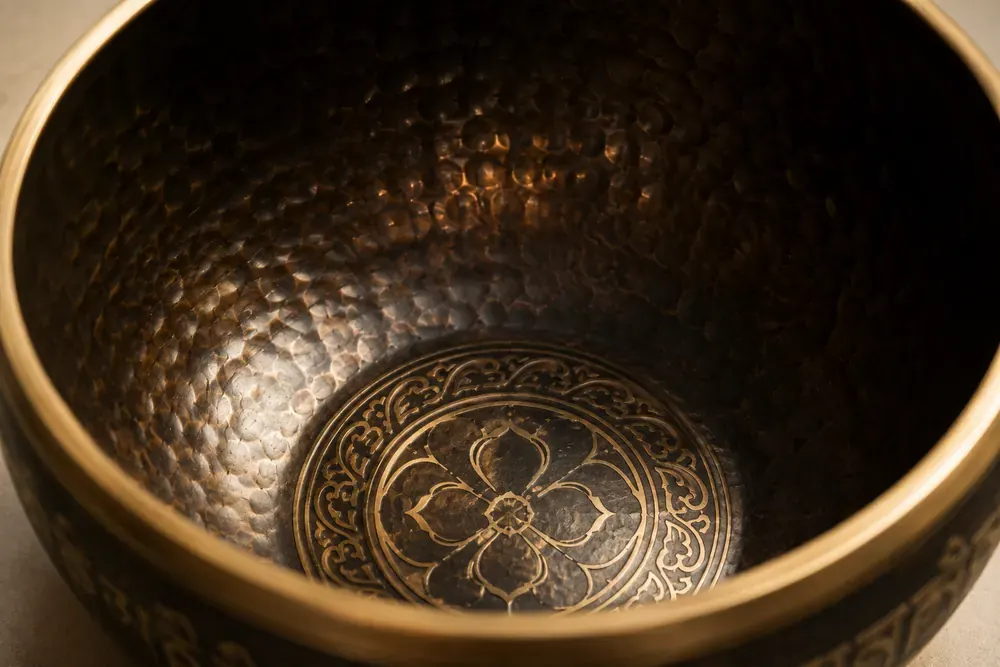
- Finish & engraving. The hammered texture should be even, the rim smooth with no burrs, and the mantra rows crisp enough to survive close-up photos, same for whichever motif is struck inside the base. Flaws here rarely change the sound, but a hand-finished object has to look like one.
- What we guarantee. Every bowl we list has been struck, sung and seated by a practitioner who leads sound baths for a living, then cross-checked against verified buyer reviews before it goes on sale. That is a trained ear on the exact instrument you receive, backed by free shipping and a 30-day money-back guarantee with a 30-day money-back guarantee.
| Check | Passes when | Fails when |
|---|---|---|
| Strike tone & sustain | Clear tone, slow even fade | Clank, pitch wobble, fast dead fade |
| Rim singing | Continuous voice at a slow stir, wood or leather | Chatter or squeal at any pace or pressure |
| Cushion seat | Stable, resonating freely | Creeping, buzzing, choked tone |
| Finish & engraving | Even hammering, smooth rim, crisp pattern | Burrs, smeared or shallow engraving |
The gear the checks are run on is public, too:
Bowl diameters in the range (8 to 17 cm), the sizes every check above is run on
— official dimension sheet, 2026
Leather mallets used in testing: 5.1 × 1 in, 7.1 × 1 in, and 7.1 × 1.6 in large head
— official dimension sheet, 2026
Observational study reporting reduced tension, anger and fatigue after Tibetan singing bowl meditation sessions
— Goldsby et al., Journal of Evidence-Based Complementary & Alternative Medicine, 2017
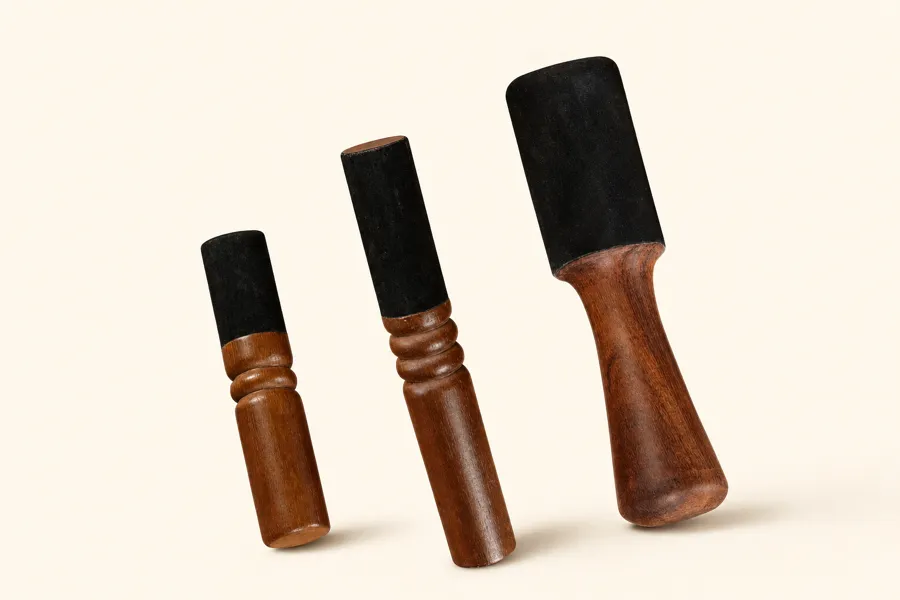
Mallets matter more than most buyers expect: the same bowl can sound bright with wood and warm with leather, which is why every bowl is played with both before we photograph it. If you are setting up a first sound bath corner at home, the pass marks above are exactly what to listen for out of the box. If what arrives does not match them, our 30-day money-back guarantee with a 30-day money-back guarantee settles it in a single email.
What we guarantee
The one study we cite is the observational 2017 paper above. Its finding is that participants reported feeling better after their sessions, and that is what we report. What we guarantee is the instrument itself, and there we are precise. The bowl that reaches you has passed all four checks above, arrives as a complete set with its cushion and mallet, and ships free. There is more on what to expect in our guide to what singing bowls realistically do. Every order carries a 30-day money-back guarantee, so the risk sits with us, not with you.

Mira Chandran · Sound practitioner & product lead at Nadam
Mira has been leading small-group sound baths for years. She plays every size Nadam sells, testing strike tone, rim singing, sustain and how the bowl sits on its cushion, before that model earns a place in the catalog.
Reviewed and updated July 4, 2026. Questions about the process? Ask us directly, a real person answers every message.
Free shipping (6–10 business days) · 30-day money-back guarantee · Secure Stripe checkout